


Discover how Mazda's focus on transparent communication and video-enabled service experiences enhances customer trust and drives dealership success.
Our latest research report analyzes 5.5M Google Reviews from 18,000 U.S. dealerships, revealing what customers are saying across the auto industry. Get your copy below:
Report: 2026 Voice of the Customer Report
Read online. Subscribe to REV
As front-end margins compress, dealerships are leaning heavily on Fixed Ops to cover the spread. Most stores run with a service absorption rate between 60 and 70%, leaving a 30-to-40 point gap that has to be funded by variable ops. Hitting 100% absorption—where fixed ops covers all overhead and the front end becomes pure margin—is the defining operational goal for 2026.
But there’s a problem: franchise dealers are consistently bleeding customer-pay volume to quick lubes and independent repair shops.
It’s easy to blame inflation, climbing dealership labor rates, or a budget-strapped consumer. But price is only part of it. When we pulled the Q1 2026 sentiment data on the industry-wide dealership experience, we found the real culprit: a massive trust deficit.
We measured the gap between complaints and compliments across the steps of getting a car fixed. Here are the top areas with the widest divergence in negative reviews from positive reviews:
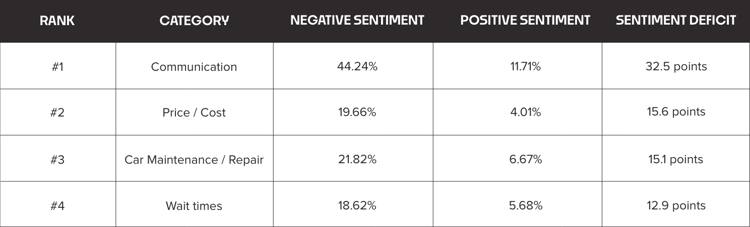
Look closely at those numbers. While price sentiment is nearly five times more likely to be a complaint than a compliment, the negative gap on communication is more than twice as wide as the gap on price.
Customers aren't just reacting to the bill; they're describing feeling ignored, surprised by the final cost, and highly skeptical of what they're being told.
Price is a macroeconomic factor that dealers have limited control over. Communication, transparency, and the experience surrounding the repair are not. That's where the opportunity is.
A trust deficit this deep doesn't close with marketing. It closes with proof.
Which is why Mazda's trajectory over the past several years is worth paying attention to—with the right context.
Over the last few years, Mazda has pushed a network-wide initiative called the Mazda Service Promise: a brand standard built around transparent communication, video-enabled MPIs, and an elevated service experience.
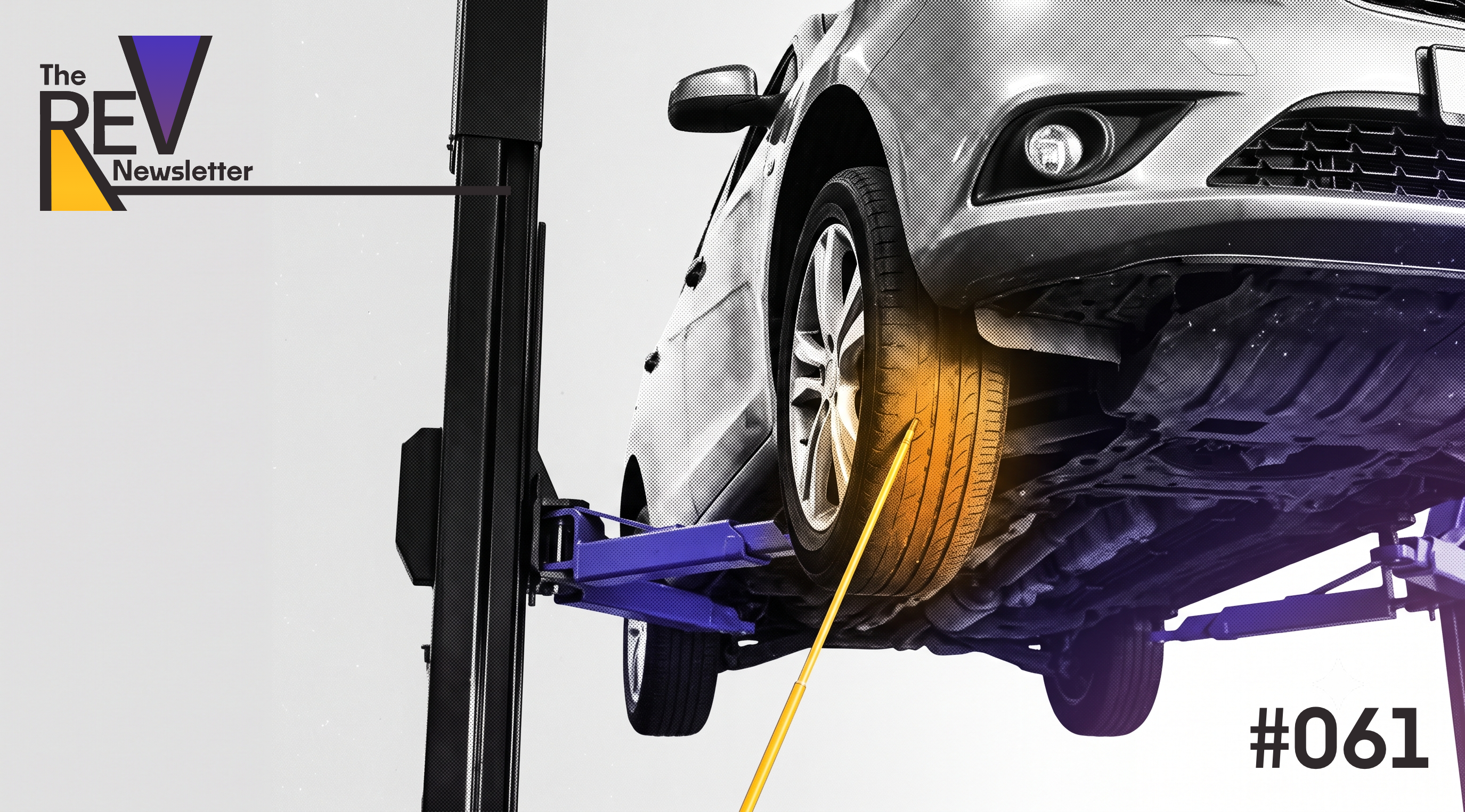
To see what that looks like in practice, take two Mazda stores in Seattle, Lee Johnson Mazda of Seattle and Lee Johnson Mazda of Kirkland. Their secret to making those videos actually convert is a $4 pointer stick. When the technician records a video of the car on the lift, they use it to physically point at the worn brake pad or leaking gasket. No hard sell. Just visual proof.
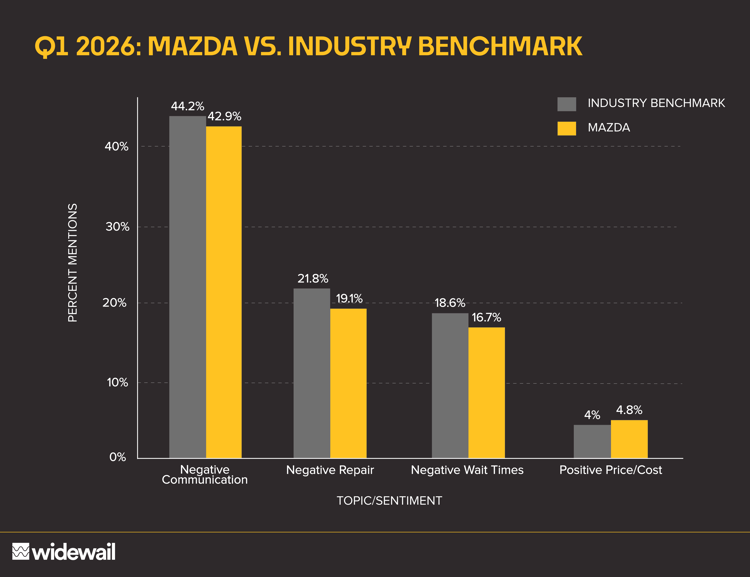
While adding video to a tech's workflow may add friction initially, the multi-year data points in a different direction. Across the brand, what’s happened to sentiment during this period is worth paying attention to.
A couple of stores doing this well isn't the story. The story is what happens when an OEM builds the conditions for consistent execution across a network and gives it years to compound.
For service leaders, the trends are worth watching. Higher authorization rates mean more approved work, which flows into parts and labor gross, and that's what actually moves an absorption number.
The most affordable region in the U.S. has the most price-sensitive service customers. The most expensive region has the most satisfied.
We cross-referenced the regional data to figure out why—and found that a customer's perceived value goes far beyond the actual invoice.
See you next week - Emily, Marketing @Widewail


U3GM Blog Post Comments