



Discover how dealerships can combat fraud and improve customer trust by enhancing review volume and monitoring feedback effectively. Learn essential strategies now.

Our latest research report analyzes 5.5M Google Reviews from 18,000 U.S. dealerships, revealing what customers are saying across the auto industry. Get your copy below:
Report: 2026 Voice of the Customer Report
Read online. Subscribe to REV
Automotive News is covering a growing variation of dealership fraud: AI-cloned websites. The playbook is straightforward — scrape real inventory, build a fake URL, intercept an out-of-state wire transfer, disappear. Small used lots and luxury stores are both getting hit. Across the industry, 1 in 4 dealers are losing 10 or more vehicles to fraud annually.
When the buyer figures out the car isn't coming, they eventually leave a review on the real store's Google Business Profile. Words like theft, fraud, and scam show up in the text.
A future shopper has no context for where that review came from. They just see the word and start looking for other reasons not to trust the store.
How much damage that does depends almost entirely on what the rest of the profile already looks like. And right now, the baseline isn't clean. Q1 2026 data shows the trust-sensitive topics most likely to compound a fraud accusation are all trending up:
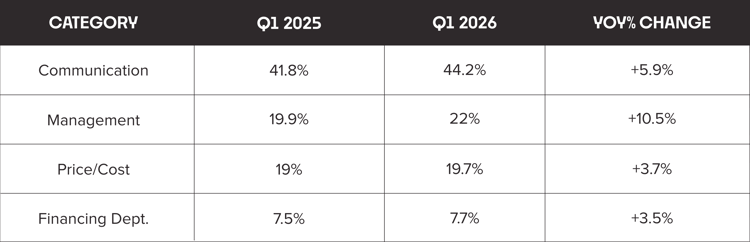
Nearly half of all negative reviews already mention communication. More than 1 in 5 call out management. A profile already carrying that kind of friction doesn't give a fraud accusation much room to look out of place.
The first line of defense is simple: watch your profile. Monitoring for review language flagging fraud, scam, or theft, especially from accounts with no prior activity, is worth building into a weekly routine.
When one lands, respond. Not for the reviewer's benefit, but to put context on the record for everyone who reads it next. Something direct works:
"We're aware of fraudulent websites impersonating our dealership and take this seriously. If you were affected, please contact us directly at [phone/email] so we can help connect you with the right resources. This does not reflect our store or our team."
That response doesn't undo the damage. But it tells the next shopper that someone is paying attention, which is exactly what an already-strained profile needs.
A response buys you context. Volume buys you resilience. They're not the same thing.
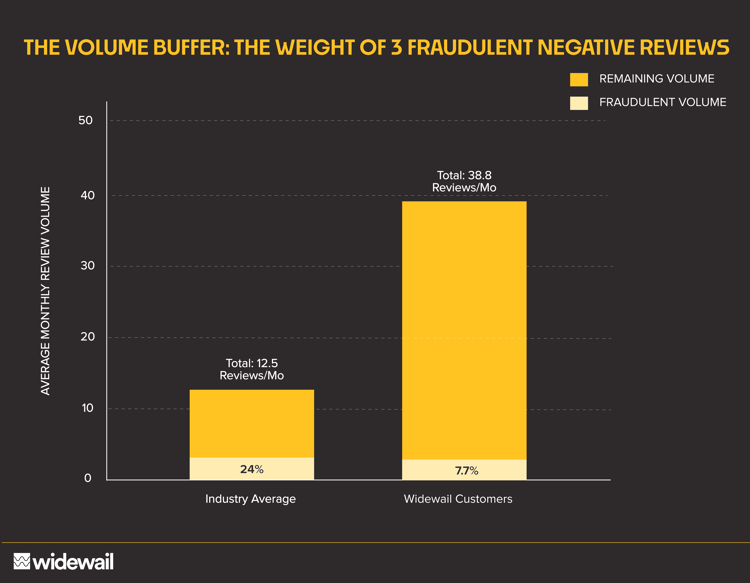
The industry average in 2025 was 12.5 reviews per month per rooftop. Three fraudulent 1-star reviews in a single week account for 24% of that monthly total. Because Google surfaces recent reviews first, those three reviews are likely the first thing a prospective buyer reads, and at 24% of monthly volume, they move the overall rating.
At 40 reviews per month — a threshold we’ve identified as a meaningful buffer point — those same three reviews represent less than 8% of monthly feedback. The rating barely shifts. The profile absorbs the hit rather than amplifying it.
Colby Joyner, VP of Marketing at Cavender Auto Group, put the underlying exposure plainly: "If you're getting 10 or 15 reviews per month, then you're putting a lot of weight on each review."
The math is the same whether the threat is a difficult customer, a legitimate complaint, or a fraud victim who found the wrong Google listing. A shallow review base makes every negative signal louder than it should be. Building volume before an incident, not after, is the only version of this that actually works.
As one GM described it: "Dilution is the solution."
Curtiss Ryan Honda had the customer experience. They just needed the volume to match.
After automating review requests with Widewail, the dealership increased review volume by 820% in 90 days. Negative reviews dropped to 3% of total feedback. GM Chuck Dortenzio's take: "Dilution is the solution."
Read the full case study here.
See you next week - Emily, Marketing @Widewail


U3GM Blog Post Comments