



Stuck at a handful of Google reviews a month? The problem isn't effort — it's memory. Here's how dealerships make review volume predictable and use it to manage the store.
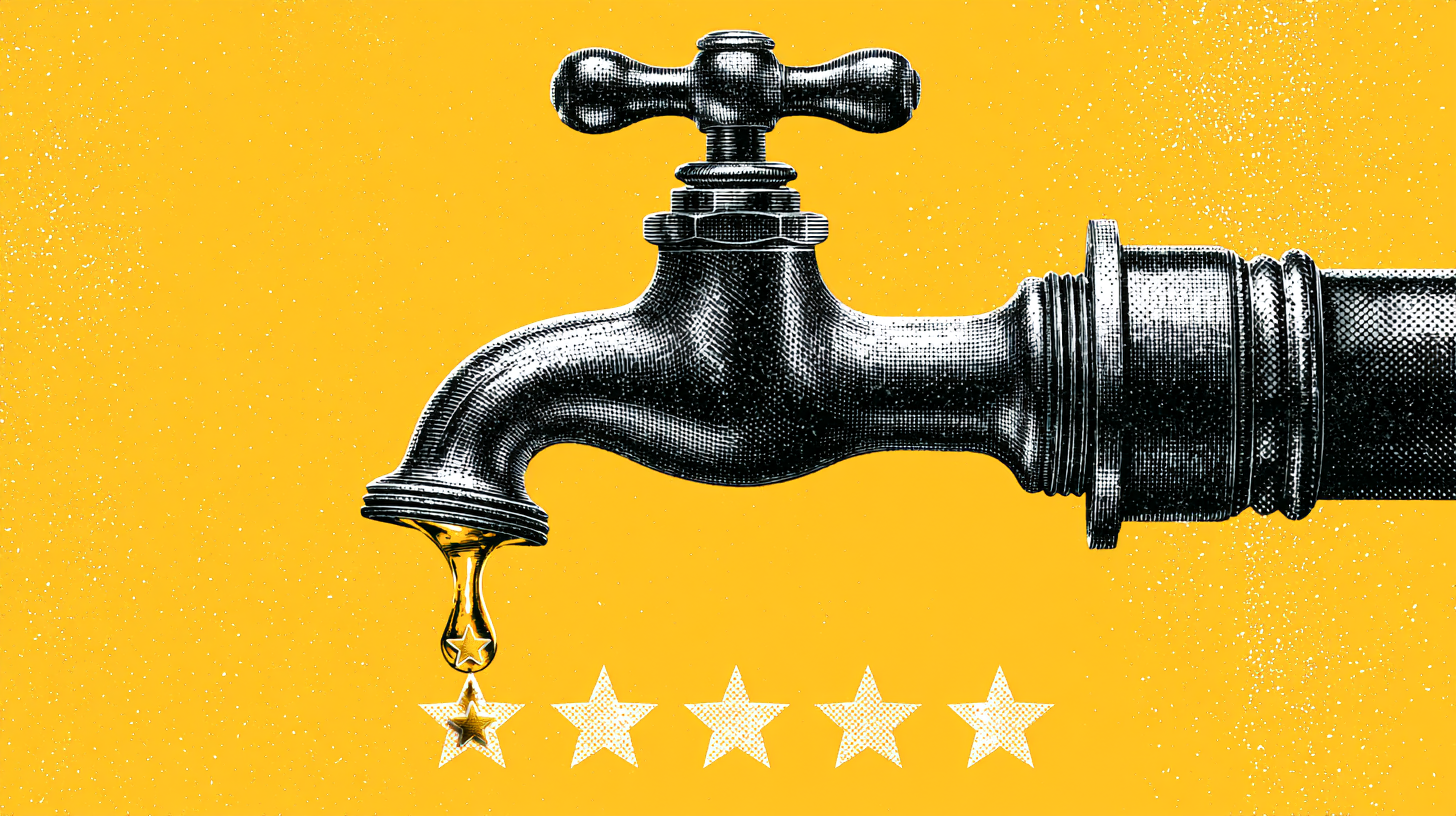
If your dealership is stuck at a handful of Google reviews a month, the problem isn't effort. It's that your review requests depend on busy people remembering to ask. Automate the ask off every closed RO and every delivered car, and volume stops being a function of who was on shift. Widewail customers average 44.1 reviews per rooftop per month against an industry median of 12.3.
Your floor is busy. Your service drive is packed. Yet the reviews trickle in at six, maybe eight a month.
If you want to know how to get more Google reviews for a car dealership, the honest answer is that the problem isn't effort. It's that almost every ask depends on a person remembering to make it, and people forget.
This is the single most common pain we hear from operators, and it has a fix that doesn't involve nagging your team harder.
Your dealership gets few Google reviews because your review generation runs on human memory. A busy advisor closing 15 ROs a day, or a salesperson delivering three cars, won't stop to ask each customer, hand them a card, and confirm they followed through. The volume you see reflects the small share of interactions where someone remembered.
The data backs this up. Across roughly 18,000 U.S. franchise rooftops in Widewail's Q1 2026 Voice of the Customer report, the median store publishes just 12.3 Google reviews a month, and that number barely moves quarter to quarter.
Industry volume did dip year over year, but that's largely a return to normal after an unusually busy 2025, when tariff and EV-credit urgency pulled buyers forward.
It isn't a warning sign. The quieter, more durable problem is this: most rooftops sit low and stay low, because the ask is capped by what a busy team remembers to do.
Most dealers have already tried the standard playbook. Each one works for a week, then fades, because each one still depends on a person remembering in the moment.
The through-line is memory. When your process assumes a busy person will pause and ask, your volume will always be capped by the worst day on your floor.
A car dealership gets more Google reviews by automating the ask so it fires on every completed transaction instead of relying on staff to remember. The mechanism is simple: trigger a review request off your DMS every time a repair order closes and every time a sale is delivered, sent by text and email while the experience is fresh. This removes the human bottleneck and makes volume predictable rather than a function of who was on shift.
That's exactly what Widewail automates. The request goes out the moment your DMS marks the RO complete or the deal delivered, so no one on your team has to remember, and the ask never depends on the worst day on your floor.
The gap it closes is enormous. In Q1 2026, Widewail customers averaged 44.1 Google reviews per rooftop per month against the industry median of 12.3, roughly three and a half times the volume. And every one of those reviews gets a response, compared with an 83% review-response rate across the industry.
It's tempting to assume the big groups simply out-review everyone because they have more traffic. They don't.
Look at the 150 largest dealer groups in the country, and only about 13% average more monthly Google reviews per store than the average Widewail customer (Widewail Q1 2026 Top-150 group data). Put the other way: nearly nine in ten of the biggest operators in retail automotive get out-published, per rooftop, by stores that simply automated the ask.
That spread proves the point: volume is a decision about process, not a function of how many cars you sell. A single busy rooftop that automates the ask can out-publish a store many times its size that leaves the ask to memory.
Here's where most reputation advice stops, and where it gets thin. Piling up five-star reviews isn't the win. It's the raw material for the win.
There's a second reason volume matters now, and it isn't vanity either. The front door is moving.
In a single year, the share of consumers using AI to find a local business jumped from 6% to 45%, making AI the third most common way people discover businesses, behind only Google and Facebook. Over the same span, the share relying on Google reviews slipped from 83% to 71% (BrightLocal). AI doesn't hand shoppers a list to scroll. It returns an answer, pulled from reviews and listings across the web, and it can only recommend what it can find. A thin review trail in one spot is easy to skip past.
Once you're collecting feedback from every closed RO and every delivery, you have a running record of what your customers actually experienced: which advisor they praised, whether the wait on a large RO frustrated them, how the financing conversation landed. That volume becomes a readable signal about what's happening inside your store, week to week, in the words of the people who were just there.
Six reviews a month tells you almost nothing. Forty-four tells you where you're winning and what to fix first. The point of turning up the volume isn't a bigger number on your Google Business Profile. It's finally having enough of your customers' own voice to manage the store by.
You can't fix a volume problem you can't measure against a benchmark. The fastest way to see whether your store is stuck at the median or pulling ahead of it is to pull your numbers and compare.
Run your dealership's free Widewail Reputation Scorecard to see your review volume, rating, and response rate against the industry benchmark, and where your biggest opportunity areas are. The full dataset behind these figures lives in Widewail's Q1 2026 Voice of the Customer report, built on 1.15 million Google reviews from U.S. franchise dealerships.
How many Google reviews should a car dealership get per month? There's no universal target, but the benchmarks are clear: the median U.S. franchise store publishes 12.3 Google reviews a month, while dealerships that automate the ask average 44.1 (Widewail Q1 2026 Voice of the Customer report). If you're sitting in the single digits, you're well below the median.
Why is my dealership's Google review volume dropping? If you're comparing against 2025, some decline is expected. That was an unusually busy year (tariff and EV-credit urgency pulled sales and reviews forward), and industry volume has since settled back toward its 2024 baseline, helped along by normal Q1 seasonality. A year-over-year dip isn't automatically a warning sign. What you can control is your own steady pace: if your store sits in the single digits month after month, that's usually the memory cap, not the market, and automating the request off each completed transaction keeps volume consistent no matter how busy the floor gets.
Do staff incentives (spiffs) increase Google reviews? They produce a short-term spike that flattens once the novelty wears off, because they still rely on a busy person remembering in the moment. The durable fix is removing the memory dependency altogether by triggering the ask automatically.
How do you automate Google review requests at a dealership? Connect the request to your DMS so it fires automatically whenever a repair order closes or a car is delivered, sent by text and email while the experience is fresh. That makes volume predictable instead of dependent on who was on shift.


U3GM Blog Post Comments