



During Q3, 100 of the top 150 dealer groups saw negativity rise. Only seven improved rating, review volume, responsiveness, and sentiment at the same time. Here is what set them apart.

Every Q3 applies pressure.
Service lanes fill up, advisors move faster, hold times spike, and across the industry, negativity usually rises right on schedule.
This year was no different.
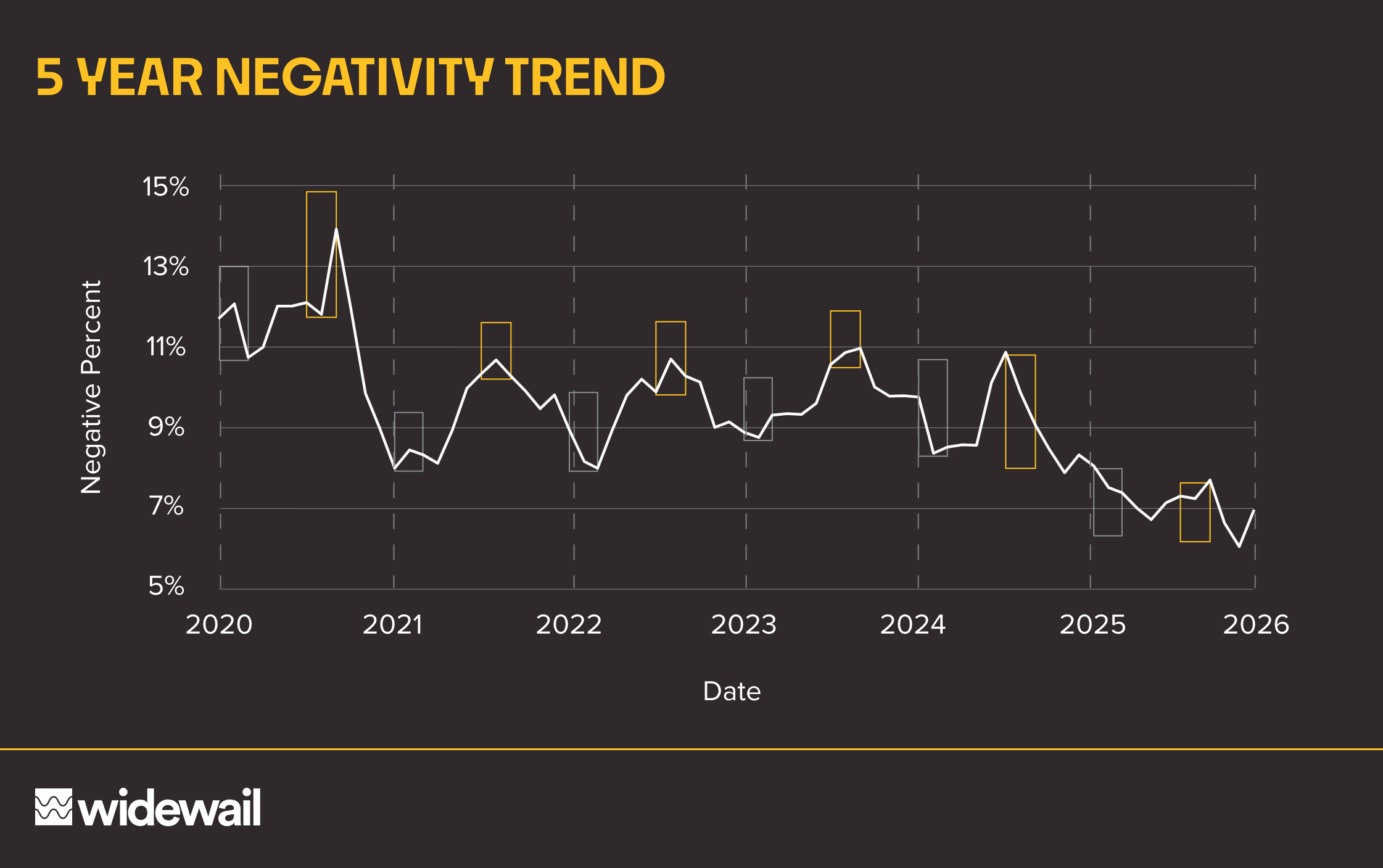
Of the top 150 auto groups, 100 saw negativity increase during Q3, as expected. 50 managed to push negativity numbers down anyway.
But lowering negativity alone didn’t guarantee progress. Of those 50, less than half translated that improvement into something customers can actually see: a higher star rating.
That’s the distinction.
Stabilizing sentiment prevents erosion. Raising your rating during peak friction means you’re gaining ground.
And when you widen the lens beyond rating to look at the full system: rating, review volume, responsiveness, and negativity together, the list narrows again.
Seven groups improved all of it. Not the top seven in the country, not the usual suspects, but groups spread across the leaderboard, ranked from #48 to #149, that improved every major reputation input while the quarter worked against them.
Here’s what that looked like:
|
Q3 Rank |
Dealership Group |
Rank Jump |
Rating Change |
Volume Change |
Response Rate Change |
Negativity Change |
|
48 |
Phil Long Dealerships |
+26 |
+0.21% |
+58.29% |
+12.24% |
-20.40% |
|
61 |
Bob Moore Auto Group |
+63 |
+3.95% |
+73.15% |
+1.26% |
-8.78% |
|
74 |
Ken Garff Auto Group |
+36 |
+1.87% |
+14.04% |
+2.73% |
-1.00% |
|
98 |
Balise Automotive Group |
+6 |
+1.53% |
+33.78% |
+2.66% |
-0.66% |
|
109 |
Envision Motors |
— |
+4.44% |
+59.96% |
+1.25% |
-4.41% |
|
140 |
Fletcher Auto Group |
+5 |
+1.98% |
+3.89% |
+0.59% |
-7.21% |
|
149 |
American Motors Group |
— |
+26.95% |
+164.00% |
+1.89% |
-2.19% |
Now address the obvious question: if a group is sitting at #149, why does this matter?
Because leaderboards reflect years of performance. Q3 reflects current control. Stabilizing and improving across every reputation lever during peak friction proves control under pressure, regardless of where you started.
Look at the rank jumps: Bob Moore climbed 63 spots. Ken Garff moved 36. Phil Long gained 26. That kind of movement happens when competitors are sliding. Even groups that held position, like American Motors, strengthened fundamentals, scaling volume, and improving rating while reducing negativity. That’s relative gain.
So what are these seven doing differently?
Not one dramatic tactic. They’re aligning the mechanics.
1. Review volume scaled with traffic.
When service load increased, review solicitation did not stall. Volume rose across all seven groups. That ensures satisfied customers remain proportionally represented. Volume does not create positivity. If operations break, it exposes it faster. But when execution holds, higher volume dilutes the impact of one-off complaints.
2. Response rates improved.
Across these 7, some gains were modest. That’s the point. This wasn’t a heroic swing; it was consistent responsiveness under pressure. In high-friction months, unanswered complaints carry disproportionate weight. 82% of customers have cut ties with a dealership due to poor communication alone. These seven groups prioritized responsiveness. By maintaining tight loops, they addressed issues in real-time to prevent further escalation.
3. Rating growth matched negativity reduction.
50 groups lowered negativity. 21 converted that into higher star ratings. These seven went even further by improving the underlying inputs that sustain that lift (volume and responsiveness) rather than relying on temporary sentiment shifts.
In today's market, a 4.5-star rating has become the baseline for dealers. Because consumers are increasingly skeptical of gamed scores, the edge lies in validation and transparency—building trust through visible evidence and no surprises.
The scale of improvement across these 7 varied. Some groups saw dramatic jumps. Others posted incremental gains.
But the pattern is consistent. Every measurable lever moved in the same direction at the same time.
That is not seasonal luck, it’s operational discipline.
Q3 acts as a stress test. Most organizations discover where systems loosen; these seven auto groups showed where theirs held. By focusing on the "controllables" like people and process, they turned seasonal pressure into relative gains. Over time, that is what moves a leaderboard.

U3GM Blog Post Comments